
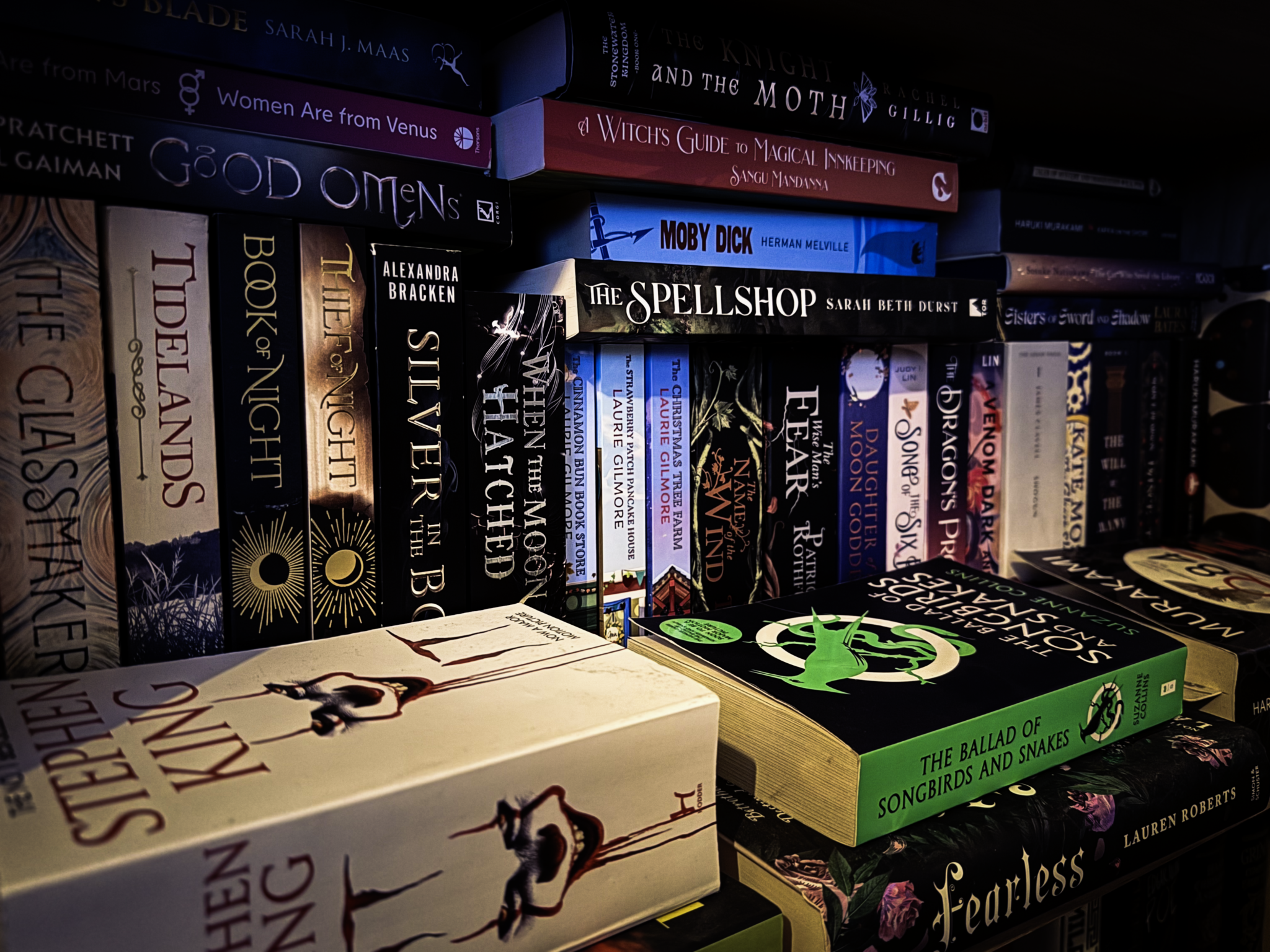
If you are anything like me, your TBR (To Be Read) pile is less of a pile and more of an unstable, structural hazard.
A few months ago, I decided to do an inventory to understand exactly how many unread books were haunting my shelves. Actually, saying I “did inventory” is a bit misleading. What I really did was count the books scattered on the floor, added them to the ones crammed on the bookcase, and—inspired by the endless stream of BookTok reading challenges—decided to make a game out of it.
Yours truly opened a book tracker spreadsheet and happily typed in 144 books, including the digital copies. But I didn’t stop there. To fully commit to the trend and gamify my reading, I created a digital Wheel of Fortune. And a Wheel of Misfortune.
I even gave this circus a name: Shelf Destruction.
Get it? I thought it was funny at the time.
Gamifying the TBR List: The Rules
The rules were simple: the colorful wheel would pick a book for me. I would have to read that book and write my notes on it (yes, I am a notes person). To make it a true challenge, I established strict boundaries:
- No DNFing (Did Not Finish): Unless the structure and formatting of the book were a total disaster, quitting was not allowed. For context, in my entire reading career of over 300 books, I had previously DNFed exactly one title (The Priory of the Orange Tree—and oh my muses, was that book unbearable).
- No Binge-Reading Series: Even if a trilogy was bound together in one massive omnibus, binging was banned. This is actually my general rule of thumb anyway. I’ve found that binging a series makes me forget the point of the overarching narrative; I start skimming the text until I get to the action, only caring about the dialogue. Plus, the characters get incredibly annoying when you read them back-to-back and realize how little they actually evolve from one installment to the next.
- The Wheel of Misfortune (The Penalty Box): This secondary wheel was populated exclusively by the books sitting on my shelves that I was actively dreading reading. I would be forced to spin it—and read whatever nightmare it landed on—if I broke my own rules (like DNFing a book or binging a series), or as a mandatory tax after every ten spins of the regular Wheel of Fortune. Whichever curse struck first.
There were supposed to be no winners or losers here. Just me and my unstable bookcase. Sounds fun, right?
Let me tell you what happened in reality.
When Reading Becomes a Chore
I clicked the button. The wheel spun and landed on The Book of Life, which is the third installment of the All Souls series.
Now, I have a very specific personal issue: I am fiercely loyal to the source material and physically incapable of watching a TV adaptation without reading the books first. Since I wanted to finally watch the show to see what Hollywood did with the story—and because I absolutely refuse to jump into a third book without refreshing my memory—I chose to go back to square one and reread the first book, A Discovery of Witches.
It was a totally legal move. It’s a book within the same series.
But after I finished that book, the challenge abruptly stopped.
I hit a wall.
Reading burnout is real.
With all these online trends pushing us to tackle our TBR lists according to random luck and spinning wheels, I had to ask myself a serious question: What if I’m just not in the mood for the next book? What if I desperately need something dark, but the algorithm hands me a rom-com? What if I want something whimsical, but I get a depressing historical drama?
Who is actually benefiting from this manufactured urgency? It certainly isn’t me.
The Anti-Challenge Mindset
People talk about reading as “escapism” like it’s a way to turn your brain off and hide. For me, it’s the exact opposite. Reading isn’t about running away from my own reality; it’s about actively exploring a new one. It’s about finding a portal to a new world. It’s traveling across dimensions, taking a long vacation in someone else’s reality, and watching the drama unfold live before your eyes.
Reading should not be a challenge. It should not be structured. It should not be linear.
I hold a strong belief that reading is a lot like time: a big ball of wibbly-wobbly, timey-wimey… stuff. Forcing it into a spreadsheet drains the magic right out of it. It turns a passion into a productivity metric designed to look good on social media, ultimately throwing you straight into a reading slump.
So, drop the forced BookTok challenge. Read your 144 books because you want to, not because a wheel told you to. And read them exactly how you want to.
Editor’s Note: If gamifying your reading with spreadsheets and challenges genuinely brings you joy, godspeed—you do what works for you. But for the rest of us? Let’s take our hobbies back.